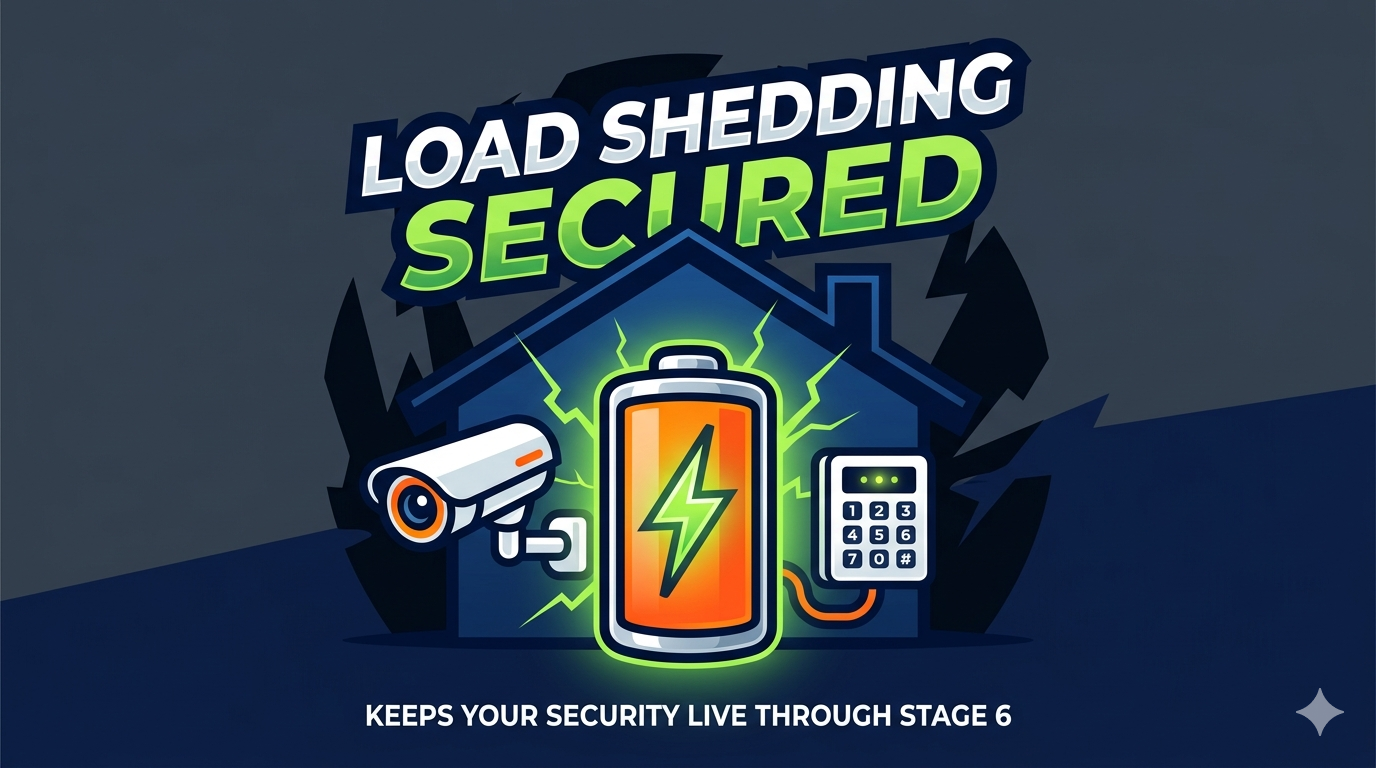
Load Shedding Resilience for Security Systems: Keeping Your Property Safe Through Stage 6
As any South African property owner knows, Stage 6 load shedding isn’t just an inconvenience; it is a critical security vulnerability. When the grid goes dark for four to four-and-a-half hours at a time, multiple times a day, opportunistic criminals take notice. Unfortunately, the harsh reality is that most standard alarm systems were never designed to withstand this level of grid instability.
If you’ve noticed your alarm system beeping incessantly, falsely triggering, or simply dying during extended power outages, you aren’t alone. Achieving true load shedding security requires upgrading from basic residential setups to professional-grade power resilience.
Here is an expert look at why standard batteries fail during extreme load shedding, and the exact hardware upgrades you need to keep your property safe.
The Problem with Standard Alarm Batteries
Most out-of-the-box alarm systems are installed with a standard 12V 7Ah sealed lead-acid (SLA) battery. In a normal environment, this battery is designed for occasional power dips—perhaps a few times a year.
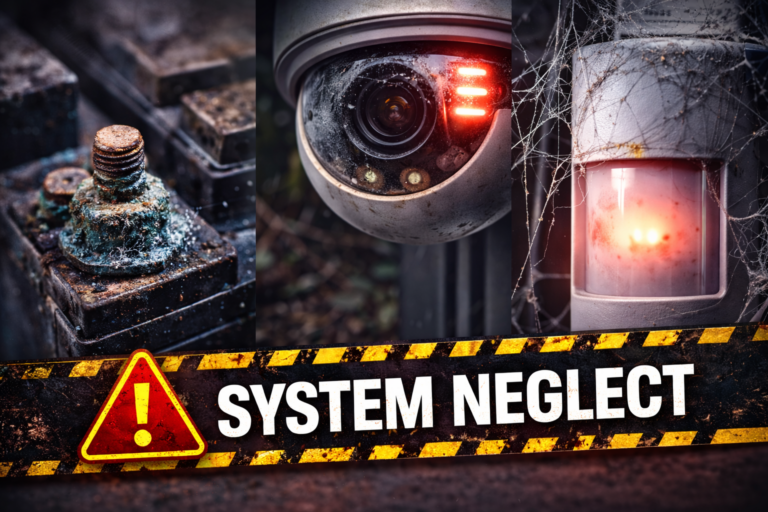
However, SLA batteries are not designed to be repeatedly drained to zero and recharged. When subjected to the aggressive cycle of daily load shedding, these batteries suffer from “sulfation,” severely reducing their lifespan. A battery that should last three years might be completely destroyed in three months under Stage 6 conditions, leaving your property completely unprotected just an hour into an outage.
Understanding the Tech: How to Bulletproof Your Setup
To build a resilient system, you need to understand the underlying power dynamics. Here are the key concepts and hardware components required to keep your security hardware online:
1. Sizing Up Your Ampere Hours (Ah)
Think of Ampere Hours (Ah) as the fuel tank for your alarm system. A standard 7Ah battery might only give you enough “fuel” for a couple of hours if you have multiple outdoor beams and sensors drawing power. Upgrading your battery backup for alarm systems to high-capacity options (like 18Ah or higher) increases your run-time, ensuring you easily bridge the gap of a Stage 6 outage.
2. Upgrading to a Deep Cycle Battery
Instead of standard SLA batteries, modern security demands a Deep Cycle Battery—ideally utilizing Lithium Iron Phosphate (LiFePO4) technology. Unlike standard batteries that degrade quickly if discharged below 50%, deep cycle and lithium batteries are specifically engineered to be drained deeply and recharged thousands of times without losing their maximum capacity.
3. Implementing a Power Inverter for CCTV
While alarms run efficiently on direct current (DC) power, full CCTV systems, Network Video Recorders (NVRs), and routers require alternating current (AC). A dedicated Power Inverter paired with a robust battery bank is essential to keep these heavier loads running seamlessly. This ensures your cameras keep recording and your alarm maintains its connection to your armed response company’s control room.
4. Overcoming Voltage Drop
A highly overlooked issue during load shedding is Voltage Drop. If you have outdoor perimeter beams at the far edges of your property, power has to travel through long cable runs. As a backup battery slowly drains, its output voltage dips. Over a long distance, this voltage drop can become so severe that the distant sensor drops offline or triggers a false alarm. Upgrading your power supply and using thicker, high-quality copper cabling is critical for large properties.
Hardware Specifics: Don’t Forget the Power Supply
One of the most common mistakes DIYers make is buying a massive lithium battery and connecting it to their existing alarm panel. The built-in chargers on standard alarm panels are too weak to recharge a high-capacity battery within the short two-hour windows between load shedding slots. This can actually burn out the alarm panel’s motherboard.
To do it right, you need to upgrade the charging hardware. Integrating a high-output Paradox power supply (or a similar professional-grade switch-mode power supply module) ensures that your system can rapidly and safely recharge large batteries. These units are designed to deliver higher charging currents, meaning your battery gets topped up faster, ensuring you are at 100% capacity before the next blackout hits.
Secure Your Peace of Mind
Navigating South Africa’s energy crisis requires moving away from consumer-grade band-aids and investing in professional security infrastructure. Don’t wait for your system to fail in the dark.
Ready to upgrade your power resilience? Browse the comprehensive range of heavy-duty power supplies, deep cycle batteries, and inverters at The Security Centre, or consult with your local accredited installer to design a system that won’t leave you vulnerable during Stage 6.