Winter-Proofing Your Security: Surviving the Cape Storms Without False Alarm Fatigue
In the Helderberg, we don’t just have “weather”—we have seasons that test the structural integrity of everything we build. As May rolls into June, the gentle breezes of autumn are replaced by the “Black South Easter” and the relentless North-Wester. For homeowners in Somerset West, Strand, and Gordon’s Bay, this seasonal shift brings a predictable and frustrating surge in security system failures.
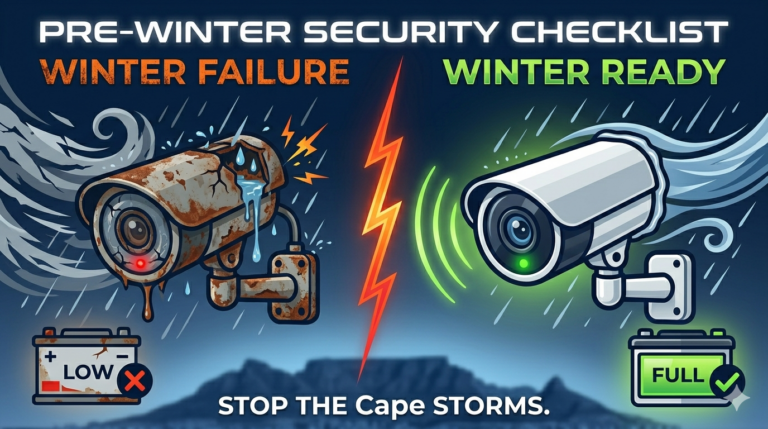
At The Security Centre, our call-out volume spikes by nearly 40% during the first heavy rains of the year. The tragedy is that the majority of these emergencies are entirely preventable. Most systems don’t fail because they are “broken”; they fail because they haven’t been winter-proofed against the specific moisture and wind-load profiles of the Cape. This guide is your pre-emptive strike to ensure your home remains a sanctuary when the storms roll in.
1. The “False Alarm” Wind Factor: Taming the North-Wester
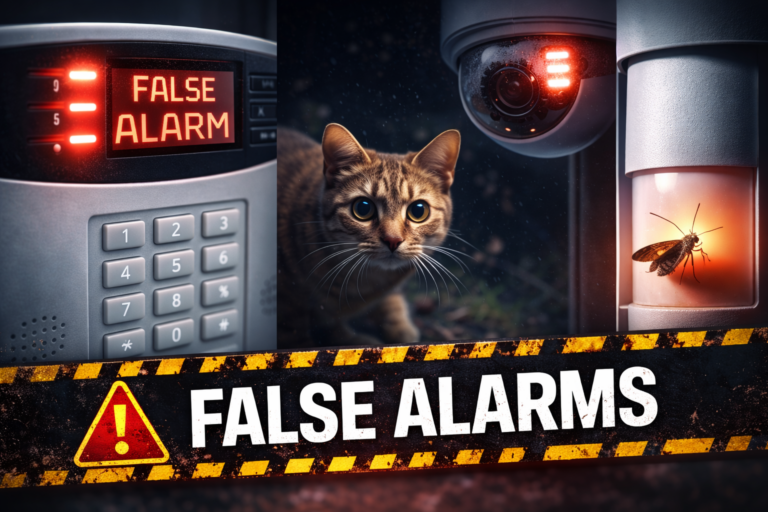
There is a specific kind of exhaustion known as “False Alarm Fatigue.” It happens when your outdoor beams trigger at 2 AM, 3 AM, and 4 AM because the wind is gusting at 60km/h. Eventually, homeowners simply disarm the outdoor zone to get some sleep, which is exactly when they are most vulnerable.
The Physics of the False Trigger
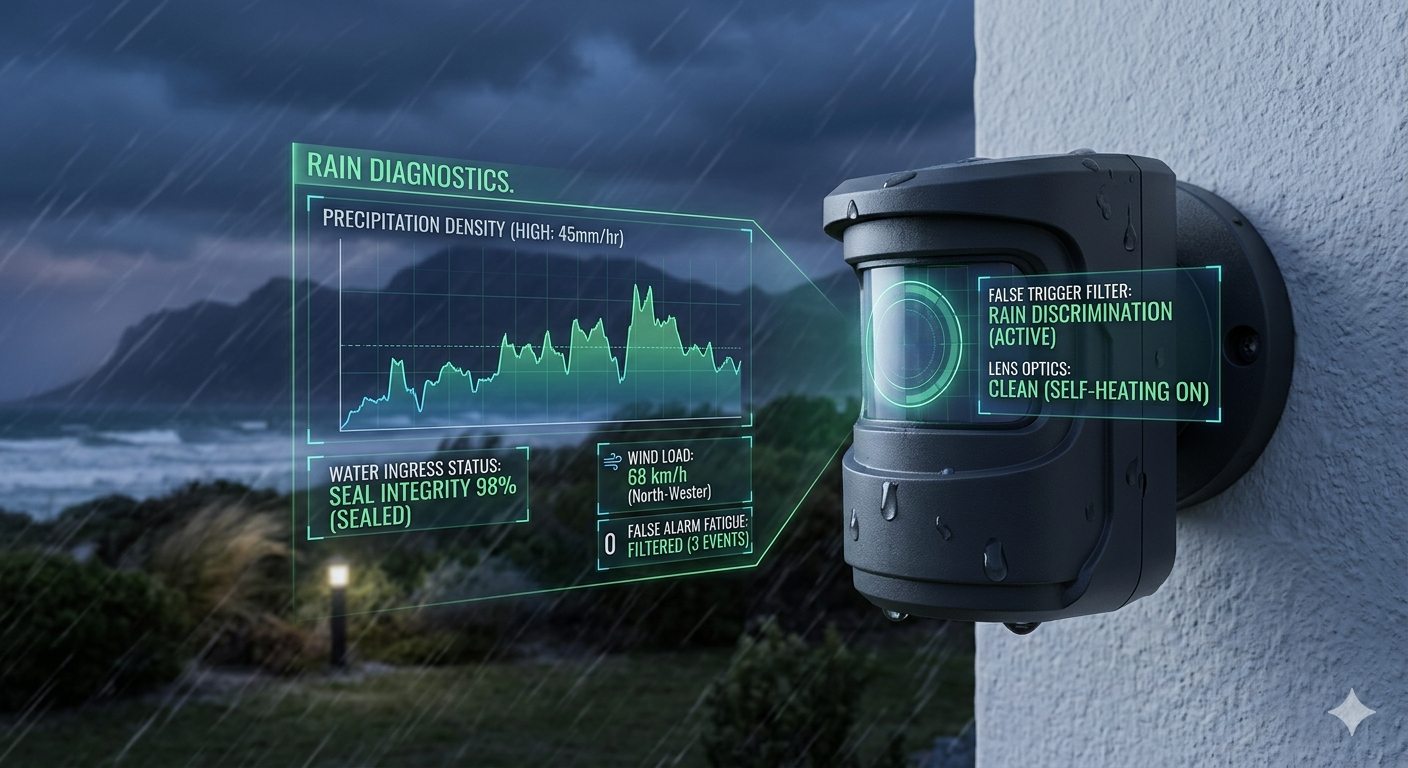
Outdoor Passive Infrared (PIR) beams are designed to detect a moving heat signature. During a Cape storm, the wind moves vegetation rapidly. If a branch enters the beam’s field of vision, the friction of the movement combined with the temperature differential of the rain-cooled leaves can look exactly like a human intruder to a basic sensor.
The Maintenance Fix
Before the first big gale hits, you must clear your “wind-catchers.” Any foliage within two metres of a beam should be trimmed back aggressively. Furthermore, check the mounting brackets. Over a long, hot summer, plastic brackets can become brittle. A slight “wobble” in the bracket means that when the wind hits the sensor, the sensor moves, making the stationary ground appear to be moving. Tightening a few screws now can save your sleep later this month.
2. Water Ingress: The Silent Circuit Destroyer
Water is the ultimate opportunist. In the Helderberg, rain doesn’t just fall vertically; the wind drives it horizontally into every microscopic crevice of your hardware.
Gate Motor Vulnerability
Your gate motor sits at ground level, often in a position where water pools during heavy downpours. We frequently find gate motors where the “breather holes” or cable entries have become clogged with debris, turning the motor housing into a bucket. Once the humidity inside the housing hits 100%, condensation forms on the motherboard. This causes “phantom triggers” (the gate opening by itself) or a total short-circuit.
The Siren “Gurgle”
Outdoor sirens are often overlooked until they start making a strange, muffled warbling sound. This is usually because water has entered the horn’s “throat.” If your siren isn’t mounted with a slight downward tilt or doesn’t have a clear path for drainage, the moisture will eventually rot the internal speaker coil.
3. Electric Fence Short-Circuits: That Ticking Sound
If you lie in bed and hear a rhythmic tick… tick… tick… coming from your perimeter, your electric fence is leaking energy. In dry weather, a small branch touching a wire might not matter. In the wet Cape winter, that branch becomes a conductor.
Arcing and Salt Crusts
For those living in the “Salt Belt” of the Strand and Gordon’s Bay, the problem is compounded. Over summer, a fine layer of salt builds up on your fence insulators. When the first rains hit, this salt turns into a conductive paste. The electricity “arcs” across the insulator to the bracket, dropping the voltage of the entire fence. Not only does this cause the energiser to alarm constantly, but it also renders the fence ineffective as a deterrent. A simple winter wash-down of your insulators can prevent this entire cycle of failure.
4. The Battery Temperature Drop: The Final Blow
In our previous post, we discussed the “Load-Shedding Trap.” Winter adds a new layer of complexity: temperature.
Standard lead-acid batteries rely on a chemical reaction that slows down significantly as the temperature drops. A battery that barely held a charge in the 25°C warmth of March will often fail completely during a 10°C June night. When the power goes out during a winter storm, a cold, weak battery will collapse within minutes, leaving your alarm dead exactly when the wind noise is loudest—providing the perfect cover for an intruder. If your backup battery is more than 12 months old, a winter replacement isn’t a luxury; it’s a necessity.
5. The 15-Minute “Winter DIY Audit”
You don’t always need a technician to identify a brewing problem. Take 15 minutes this weekend to run through this checklist:
- The Seal Check: Inspect your gate motor cover. Is it cracked? Is the gasket still soft, or has it hardened and split?
- The Lens Wipe: Use a soft, damp cloth to wipe the salt and dust off your outdoor beam lenses and CCTV camera covers. Dirty lenses increase the chance of infrared “bounce-back” and false alarms.
- The Obstruction Clear: Trim any creepers or branches that have grown near your electric fence or beams over the autumn.
- The Siren Test: Trigger your panic button (after notifying your armed response) to ensure the outdoor siren is loud, clear, and not “muffled” by water.
- The Insect Eviction: Ants and geckos love the warmth of a security control panel or gate motor. Their presence often leads to short-circuits when the humidity rises. Clear them out now.
Technician’s Hack: The “Sensor Umbrella”
For highly exposed outdoor beams, we often install a simple, low-cost “weather shield”—essentially a small polycarbonate “umbrella” that sits above the sensor. This prevents rain droplets from sitting directly on the lens, which is the primary cause of refraction-based false alarms. It’s a R150 fix that prevents a R1,500 headache.
Conclusion: Staying High and Dry
The Cape storms are inevitable, but a failing security system is not. By treating your security hardware as a living system that requires seasonal adjustment, you ensure that your “Last Line of Defence” doesn’t become a source of frustration.
At The Security Centre, we specialise in “Ruggedised Maintenance.” We know exactly where the water gets in and why the wind causes the “tick.” Don’t wait for a midnight alarm failure during a cold front to call us.
Is your system ready for the first big rain? Contact us today for a Winter Service Plan. We’ll seal the leaks, test the batteries, and ensure your home stays secure while you stay dry.