Professional Grade Hardware vs. DIY Retail Kits: Why Your Property Deserves Better
It is easy to see the appeal. You walk into a local hardware or retail store, and right there on the end-cap is a glossy box promising complete home security for a fraction of the cost of a custom installation. Just connect the Wi-Fi camera to your router, download an app, and you are supposedly safe.
But there is a harsh reality that South African property owners must face: in an environment where opportunistic crime and organized syndicates operate with high levels of sophistication, consumer-grade electronics frequently fail when they are needed most.
True safety isn’t a gadget you plug into a wall; it is an infrastructure investment. Here is a technical breakdown of why securing your property demands professional security hardware, and the hidden vulnerabilities of off-the-shelf DIY kits.
Data Sovereignty: The NVR vs Cloud Debate
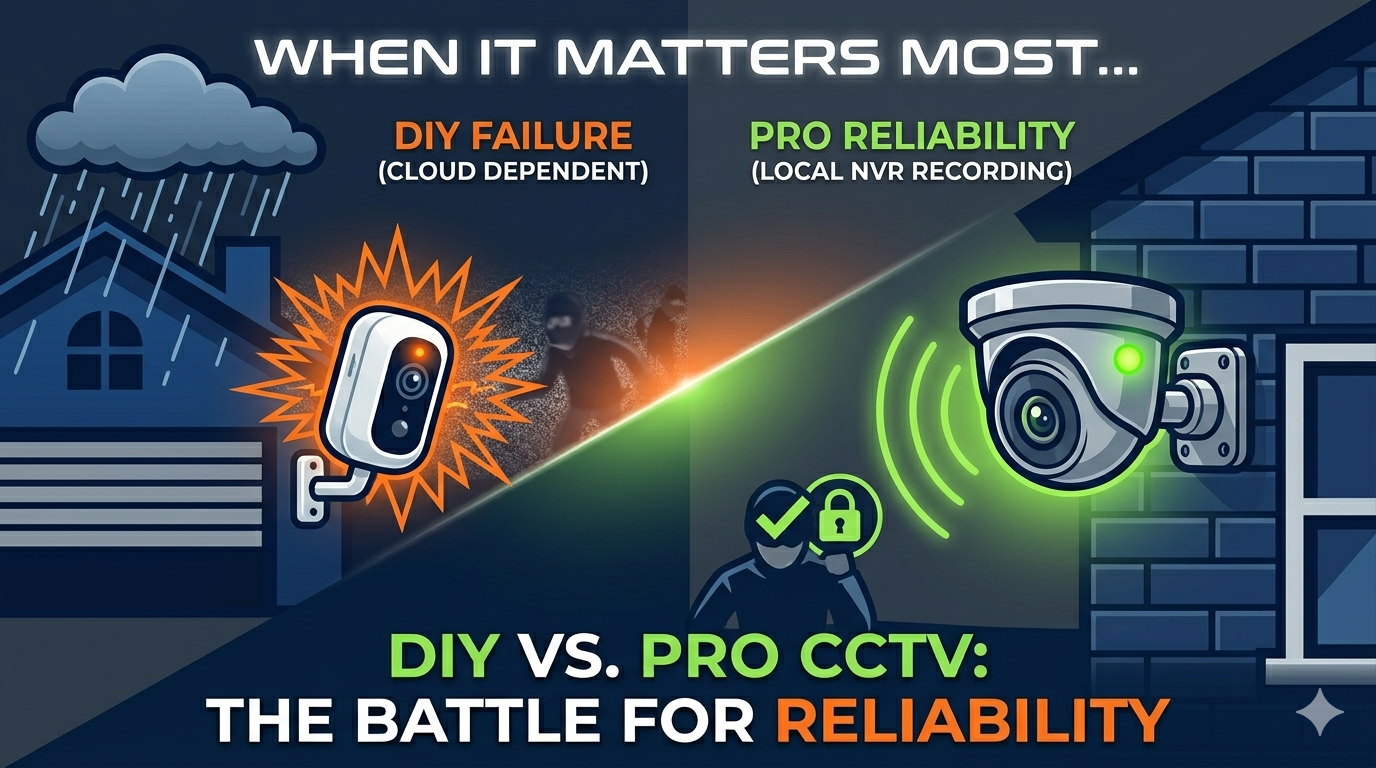
One of the most critical weaknesses of retail DIY cameras is their absolute reliance on Wi-Fi and cloud storage. When evaluating the NVR vs Cloud storage model, consumer kits almost exclusively push you toward a rented cloud ecosystem.
This presents a fatal flaw in the South African context. If your fibre line drops, your router loses power during load shedding, or criminals deploy a localized Wi-Fi signal jammer, a cloud-dependent camera instantly becomes a useless piece of plastic. It cannot record, and it cannot alert you.
Professional systems prioritize technical sovereignty—meaning you own and control your data infrastructure. A commercial setup utilizes a hardwired Network Video Recorder (NVR). Because the cameras are physically cabled directly to the NVR (often utilizing Power over Ethernet), they continuously record high-definition footage to a localized hard drive, completely independent of your internet connection or Wi-Fi stability.
Bandwidth, Storage, and Efficiency
Another hidden cost of retail Wi-Fi cameras is the toll they take on your local network. Streaming high-definition video 24/7 requires massive amounts of data bandwidth.
Professional hardware solves this mathematical bottleneck through advanced H.265+ Compression. This highly efficient video encoding technology—standard in commercial-grade systems—drastically reduces the file size of the video feed without sacrificing image quality.
Why does this matter? It allows high-megapixel professional cameras to store weeks, or even months, of crystal-clear footage on an NVR hard drive while using minimal bandwidth. In contrast, cheap DIY kits using older compression standards will either choke your home Wi-Fi network or force you to pay exorbitant monthly subscription fees for enough cloud storage to hold just a few days of video.
Surviving the South African Climate
A camera’s ability to survive outdoors is measured by its IP Rating (Ingress Protection). This is a standardized metric indicating how well the device seals out dust and moisture.
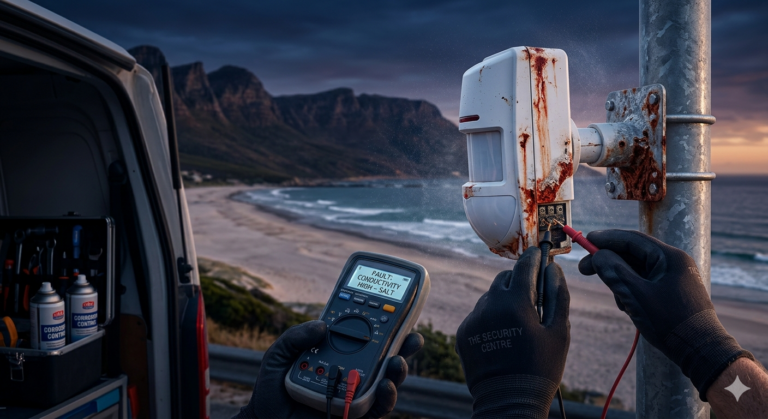
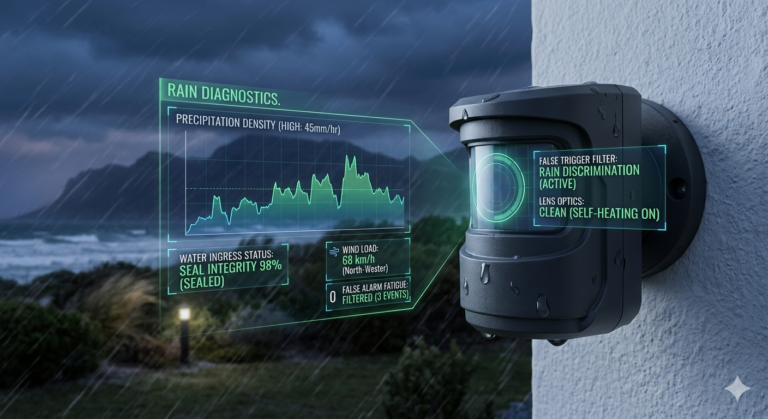
Many retail kits use cheap plastics with low IP ratings. Under the brutal African sun, the plastic housing quickly suffers from UV rot, becoming brittle. During heavy Highveld thunderstorms or in the corrosive coastal air of the Western Cape, water ingress easily destroys the internal circuitry.
When you invest in professional security hardware, you are paying for industrial-grade durability. A commercial outdoor camera will typically feature an IP67-rated metal housing. This means it is entirely dust-tight and can survive being submerged in water, ensuring decades of reliable performance regardless of the weather.
Cybersecurity: Guarding Your Privacy
The most alarming vulnerability of DIY kits is cybersecurity. Cheap, unbranded Wi-Fi cameras are notoriously rushed to market with outdated firmware, hardcoded backdoor passwords, and zero ongoing software support. This makes them incredibly easy targets for remote hackers to hijack your private video feeds.
When comparing commercial giants like Hikvision vs DIY cameras, the difference in digital security is monumental. Professional brands engineer their hardware with strict Encryption Standards (such as TLS and HTTPS protocols) and mandate complex password setups during initialization. Furthermore, professional manufacturers release continuous firmware updates to patch newly discovered vulnerabilities, actively protecting your network long after the hardware is installed.
True Security is an Investment
There is no shortcut to protecting your property and your family. Relying on rented cloud space and consumer-grade plastics leaves massive gaps in your digital and physical perimeter.
Don’t wait for a DIY system to fail during a critical moment. If you are ready to upgrade your perimeter with reliable, hardwired infrastructure, explore the range of commercial-grade CCTV solutions at The Security Centre, or consult with our network of accredited B2B installation partners to design a system built for South African realities.